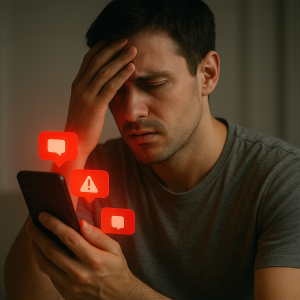
Have You Been Feeling More Anxious Lately, Even When Nothing Seems Wrong?
Perhaps you’ve always considered yourself someone who handles stress well. You’ve managed your career, relationships, family responsibilities, and countless challenges. But lately, something feels different.
You might wake up in the middle of the night with your heart racing, experience sudden waves of anxiety, or find yourself worrying about things that never used to bother you. Perhaps you’re more irritable, easily overwhelmed, or emotionally sensitive. You may even wonder, “Why don’t I feel like myself anymore?”
If you’re in your 40s or 50s, perimenopause or menopause could be contributing to these changes.
As a health psychologist, I frequently help women understand the complex relationship between physical health, hormonal changes, stress, and emotional well-being.
I want you to understand something important: Your symptoms are real, there are understandable reasons you may be experiencing them, and effective treatments are available.
You don’t have to simply endure anxiety while waiting for your hormones to settle. There are practical, evidence-based ways to improve how you feel.
Why Can Perimenopause and Menopause Trigger Anxiety?
Perimenopause is the transitional period leading up to menopause, when reproductive hormones begin fluctuating. Menopause is generally defined as having gone 12 consecutive months without a menstrual period, when there is no other medical explanation.
Although most people associate menopause with hot flashes and changes in menstruation, the psychological effects can be equally challenging.
Estrogen and progesterone interact with brain systems involved in emotional regulation, sleep, and the stress response. As hormone levels fluctuate, some women notice changes in how they experience and respond to stress.
According to the American College of Obstetricians and Gynecologists (ACOG), hormonal changes during menopause can contribute to anxiety, particularly when combined with stress and disrupted sleep.
You may experience:
- Increased anxiety or excessive worrying, even about familiar situations.
- Panic-like symptoms, including a racing heart, trembling, or sudden feelings of fear.
- Irritability and emotional sensitivity, making everyday frustrations harder to manage.
- Sleep disturbances, including nighttime awakenings, night sweats, and difficulty returning to sleep.
- Difficulty concentrating or brain fog, sometimes leading to concerns about memory.
- Health anxiety, particularly when unfamiliar physical sensations raise concerns about your health.
- Changes in self-confidence or identity, especially as your body, relationships, or life circumstances evolve.
Not every woman experiences these symptoms, and hormones are rarely the only factor involved.
Sleep disruption, existing anxiety vulnerabilities, medical conditions, and major life stressors can all contribute.
For many women, this transition also coincides with demanding careers, changing family roles, aging parents, relationship adjustments, and questions about what comes next in life.
In my practice, I help women understand these overlapping influences through a health psychology perspective.
You can learn more about my approach to perimenopause and menopause therapy and how psychological treatment can help you navigate this transition.
The Anxiety Cycle: How Your Thoughts and Physical Symptoms Can Reinforce Each Other
One of the most helpful things I teach my patients is how anxiety develops and maintains itself.
Imagine waking up at 3 a.m. feeling unusually warm, with your heart pounding.
Your immediate thought might be:
“Something is wrong with me. What if I’m having a heart problem?”
That thought increases your sense of danger, activating your body’s stress response. Your heart may beat faster, your muscles tense, and your attention become increasingly focused on every physical sensation.
The more you monitor these sensations, the more frightening they may become.
This creates what psychologists call an anxiety cycle:
Physical sensation → Fearful interpretation → Increased anxiety → Heightened physical sensations → More worry
During perimenopause, unfamiliar bodily changes may provide additional opportunities for this cycle to develop.
If you’ve started worrying excessively about physical symptoms, you may also be experiencing aspects of health anxiety or illness anxiety.
Importantly, new or concerning physical symptoms deserve appropriate medical evaluation. The goal of psychological treatment isn’t to dismiss your symptoms. Rather, it’s to help you distinguish between physical health concerns that require attention and anxiety-driven interpretations that may be intensifying your distress.
With the right tools, you can learn to respond to uncomfortable sensations without becoming trapped in a cycle of fear.
7 Practical Ways to Manage Perimenopause and Menopause Anxiety
1. Recognize Anxiety Without Automatically Believing Every Anxious Thought
Anxiety often causes your mind to overestimate danger and underestimate your ability to cope.
For example, you may notice thoughts such as:
- “I’m losing control of my emotions.”
- “What if I never feel normal again?”
- “I can’t handle stress the way I used to.”
- “Something must be seriously wrong with my health.”
These thoughts can feel convincing, particularly when you’re physically uncomfortable or exhausted.
One strategy I use in Cognitive Behavioral Therapy (CBT) is helping patients examine these thoughts rather than automatically accepting them as facts.
Try asking yourself:
- What evidence supports this worry?
- Am I assuming the worst possible outcome?
- Is there another reasonable explanation?
- What would I say to someone I care about who was experiencing this?
Instead of telling yourself, “I can’t handle this,” try:
“I’m experiencing some uncomfortable changes, but I can learn ways to manage them.”
The goal isn’t forced positive thinking. It’s developing a more balanced, realistic perspective.
CBT is an established treatment for anxiety disorders, and clinical guidance from NICE also recognizes menopause-specific CBT as an option for certain menopause-related symptoms, including sleep difficulties.
If anxiety has begun interfering with your daily life, learning more about anxiety treatment and psychological therapy may be a helpful next step.
2. Learn to Calm Your Stress Response
When you’re anxious, your body activates its sympathetic nervous system, preparing you to respond to a perceived threat.
Although this response is protective, it can become uncomfortable when it occurs frequently or in situations that aren’t dangerous.
Slow, comfortable breathing, mindfulness, and relaxation exercises can help you manage stress-related physiological arousal.
Try this brief calming exercise:
- Sit comfortably and gently relax your shoulders.
- Inhale slowly and naturally for approximately four seconds.
- Exhale gently for approximately six seconds, without forcing your breath.
- Continue for one to two minutes, adjusting the pace to what feels comfortable.
- Notice any changes in your muscle tension, breathing, or sense of calm.
If counting makes you uncomfortable or dizzy, simply allow your breathing to become slower and easier.
Breathing exercises are useful for managing stress-related arousal, although they have not been established as an effective treatment for reducing menopausal hot flashes.
The goal is to develop confidence in your ability to manage your body’s stress response rather than becoming increasingly fearful of it.
3. Prioritize Sleep—It’s Essential for Emotional Health
If you’re experiencing night sweats, insomnia, or frequent nighttime awakenings, you may have noticed that anxiety becomes significantly worse after a poor night’s sleep.
Sleep and emotional regulation are closely connected. When you’re sleep-deprived, everyday challenges may feel more overwhelming, and it can become harder to concentrate or manage worry.
Some helpful strategies include:
- Maintaining consistent sleep and wake times.
- Creating a cool, comfortable sleeping environment.
- Reducing caffeine later in the day if it interferes with your sleep.
- Establishing a relaxing nighttime routine.
- Avoiding repeatedly checking the clock when you wake during the night.
If insomnia has become persistent, Cognitive Behavioral Therapy for Insomnia (CBT-I) is an evidence-based treatment that can help address the thoughts and behaviors that maintain sleep difficulties.
As a psychologist specializing in insomnia and sleep-related concerns, I help patients develop individualized strategies to improve sleep while addressing the anxiety that may accompany it.
You don’t necessarily have to accept disrupted sleep as an unavoidable part of getting older.
4. Stop Fighting Every Uncomfortable Feeling
It’s natural to want anxiety to disappear as quickly as possible. Unfortunately, constantly monitoring your feelings, avoiding situations, or struggling to eliminate every uncomfortable sensation can sometimes make anxiety more persistent.
Acceptance and Commitment Therapy (ACT) offers a different perspective.
Rather than focusing exclusively on eliminating anxiety, ACT helps you develop psychological flexibility—the ability to experience uncomfortable thoughts and emotions without allowing them to dictate your choices.
For example, instead of thinking:
“I need to stop feeling anxious before I can enjoy my day,”
you might practice:
“I can acknowledge that I’m feeling anxious and still choose to participate in something meaningful.”
Acceptance does not mean resignation or giving up on feeling better. It means reducing the additional suffering that can come from fighting experiences you cannot always immediately control.
This can be particularly helpful during menopause, when some physical and emotional changes may be unpredictable.
I’ve written more about this approach in my article on distress tolerance, resilience, and the psychology of becoming stronger.
5. Support Your Mental Health Through Regular Movement
Physical activity can be an important part of managing anxiety, improving mood, and supporting sleep.
You don’t need an intense exercise routine to benefit.
Walking, strength training, swimming, yoga, or other enjoyable activities can provide opportunities to reduce stress and improve emotional well-being.
I encourage my patients to find movement they genuinely enjoy rather than viewing exercise as another obligation.
During perimenopause and menopause, it’s also important to recognize that your energy and physical comfort may vary from day to day.
Consistency, flexibility, and self-compassion are often more helpful than perfection.
6. Reevaluate Your Stress and Give Yourself Permission to Set Boundaries
Many women entering perimenopause are also navigating a particularly demanding phase of life.
You may be supporting children, caring for aging parents, managing a career, maintaining relationships, and meeting expectations you’ve carried for years.
When anxiety or sleep difficulties increase, continuing to push yourself without adjusting your expectations can become exhausting.
Consider asking yourself:
- Am I taking on more responsibilities than I realistically have time for?
- Do I feel guilty when I prioritize my own needs?
- Have I stopped making time for activities that bring me enjoyment?
- What responsibilities could I share, delegate, or reconsider?
Setting healthy boundaries is not selfish. It’s an important part of maintaining your psychological health.
Sometimes, improving your well-being means learning that you don’t have to do everything—or do everything perfectly.
7. Seek Support Rather Than Trying to Manage Everything Alone
One of the most challenging aspects of perimenopause and menopause is feeling that others don’t understand what you’re experiencing.
You may look perfectly fine on the outside while privately struggling with anxiety, exhaustion, or an unfamiliar sense of emotional vulnerability.
Talking openly with trusted people can reduce isolation and provide meaningful emotional support.
It’s also important to discuss new or worsening symptoms with your healthcare provider. Anxiety-like symptoms can overlap with medical conditions, medication effects, and sleep disorders, so a comprehensive evaluation may be appropriate.
Depending on your symptoms and medical history, your clinician may discuss menopause hormone therapy, nonhormonal medications, or other medical treatments.
Psychological therapy can complement appropriate medical care rather than replace it.
You can also explore my related article, Hormonal Changes and Mental Health Therapy for Women, for additional information about how hormonal transitions can influence psychological well-being.
How Can a Health Psychologist Help With Menopause Anxiety?
As a health psychologist, I specialize in understanding the relationship between physical health, psychological functioning, and behavior.
This perspective is particularly valuable during perimenopause and menopause because your emotional and physical experiences are closely connected.
In my practice, Evolutions Behavioral Health, I provide individualized, evidence-based treatment for women experiencing anxiety, panic symptoms, insomnia, emotional distress, and difficulty adjusting to life transitions.
Depending on your needs, our work together may include:
Cognitive Behavioral Therapy (CBT): Identifying and changing thought patterns and behaviors that contribute to persistent anxiety, panic, and sleep difficulties.
Acceptance and Commitment Therapy (ACT): Helping you respond to uncomfortable emotions with greater flexibility while reconnecting with your values, goals, and sense of purpose.
Biofeedback and Stress Management: Learning to recognize physiological signs of stress and develop greater confidence in managing your body’s responses.
Mindfulness-Based Strategies: Developing greater awareness of your thoughts, emotions, and physical sensations without becoming overwhelmed by them.
Clinical Hypnosis: When appropriate, incorporating therapeutic hypnosis as part of a comprehensive treatment approach. Research reviewed by The Menopause Society supports clinical hypnosis as an option for managing menopausal hot flashes. More recent ACOG guidance also suggests potential benefits for menopause-related sleep and anxiety symptoms, although the evidence for those outcomes remains limited.
Sleep-Focused Therapy: Addressing insomnia and behaviors that interfere with restorative sleep.
Perhaps most importantly, therapy provides a supportive environment where your experiences are taken seriously.
My approach is collaborative and practical. I want you to understand what’s happening, develop strategies that work in your daily life, and feel more confident in your ability to manage challenges.
When Should You Consider Therapy for Menopause Anxiety?
You don’t have to wait until your symptoms become severe to seek help.
Therapy may be especially helpful if:
- You’re worrying more than usual and find it difficult to stop.
- You’ve started experiencing panic attacks or avoiding activities because of anxiety.
- Sleep problems are affecting your mood, energy, or concentration.
- You feel increasingly irritable, overwhelmed, or emotionally exhausted.
- You’re spending significant time worrying about your physical health.
- Your confidence, relationships, or enjoyment of life have been affected.
- You simply don’t feel like yourself and want help understanding why.
You don’t need to have a diagnosed anxiety disorder to benefit from psychological support.
Sometimes, seeking help early can prevent patterns of anxiety, avoidance, and sleep difficulties from becoming more entrenched.
Menopause Is a Transition, Not the End of Feeling Like Yourself
If you’re struggling with anxiety during perimenopause or menopause, I hope you’ll remember that this transition does not have to define your emotional well-being.
Your body may be changing, but you can still develop new ways to feel grounded, confident, and connected to the life you want to live.
In fact, this stage of life can provide an opportunity to reconsider old expectations, establish healthier boundaries, and prioritize your own needs in ways you may not have done before.
You don’t need to have all the answers right now.
You simply need a place to begin.
Ready to Feel More Like Yourself Again? I’m Here to Help.
If you’ve been struggling with perimenopause or menopause-related anxiety, panic symptoms, sleep difficulties, or emotional changes, I would welcome the opportunity to help you.
My name is Dr. Rae Mazzei, and I am a health psychologist specializing in evidence-based treatment for anxiety, sleep difficulties, and health-related psychological concerns.
At Evolutions Behavioral Health, my goal is to help you better understand your experiences, develop effective coping strategies, and move forward with greater confidence and emotional well-being.
I offer personalized teletherapy to patients in Tennessee, Arizona, Illinois, and other eligible PSYPACT states, making it possible to receive care from the comfort and privacy of your own home.
If you’re wondering whether therapy might be helpful, I invite you to reach out. I’d be happy to learn more about what you’re experiencing and discuss whether my approach would be a good fit for your needs.
Call or text: (480) 448-6755
Email: rmazzei@evolutionsbh.com
Learn more: Perimenopause and Menopause Therapy
Getting started: How to Begin Therapy
You deserve to feel heard, supported, and confident as you navigate this stage of life. Together, we can work toward helping you feel more like yourself again.
Research and Additional Resources
- American College of Obstetricians and Gynecologists. (2025). Stress makes me feel so anxious now that I’m menopausal. Is this normal?
- American College of Obstetricians and Gynecologists. (2026). Management of Menopause-Related Vasomotor, Sleep, and Mood Symptoms.
- National Institute for Health and Care Excellence. Menopause: Identification and Management (NG23).
- The North American Menopause Society. (2023). The 2023 Nonhormone Therapy Position Statement.